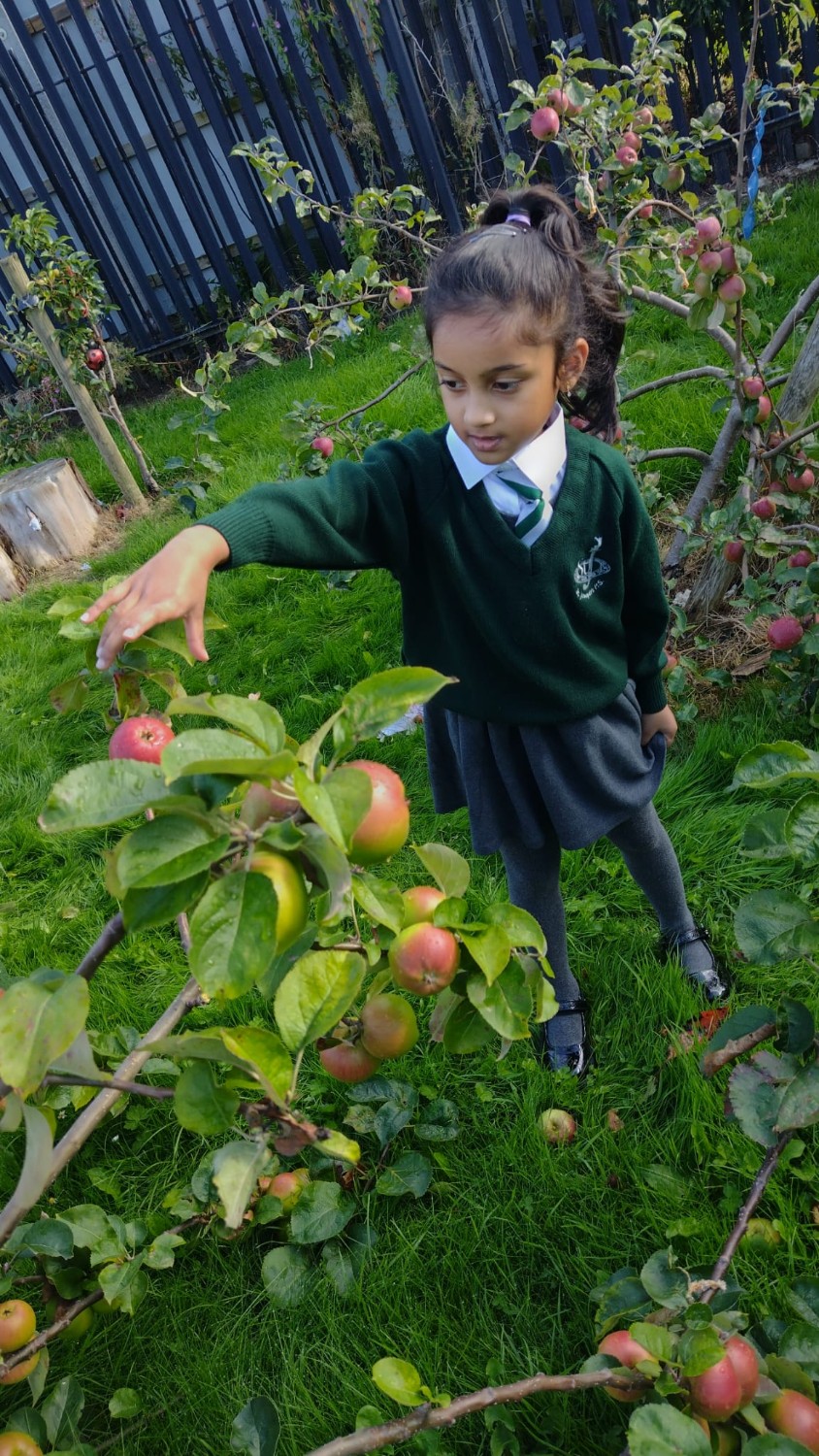
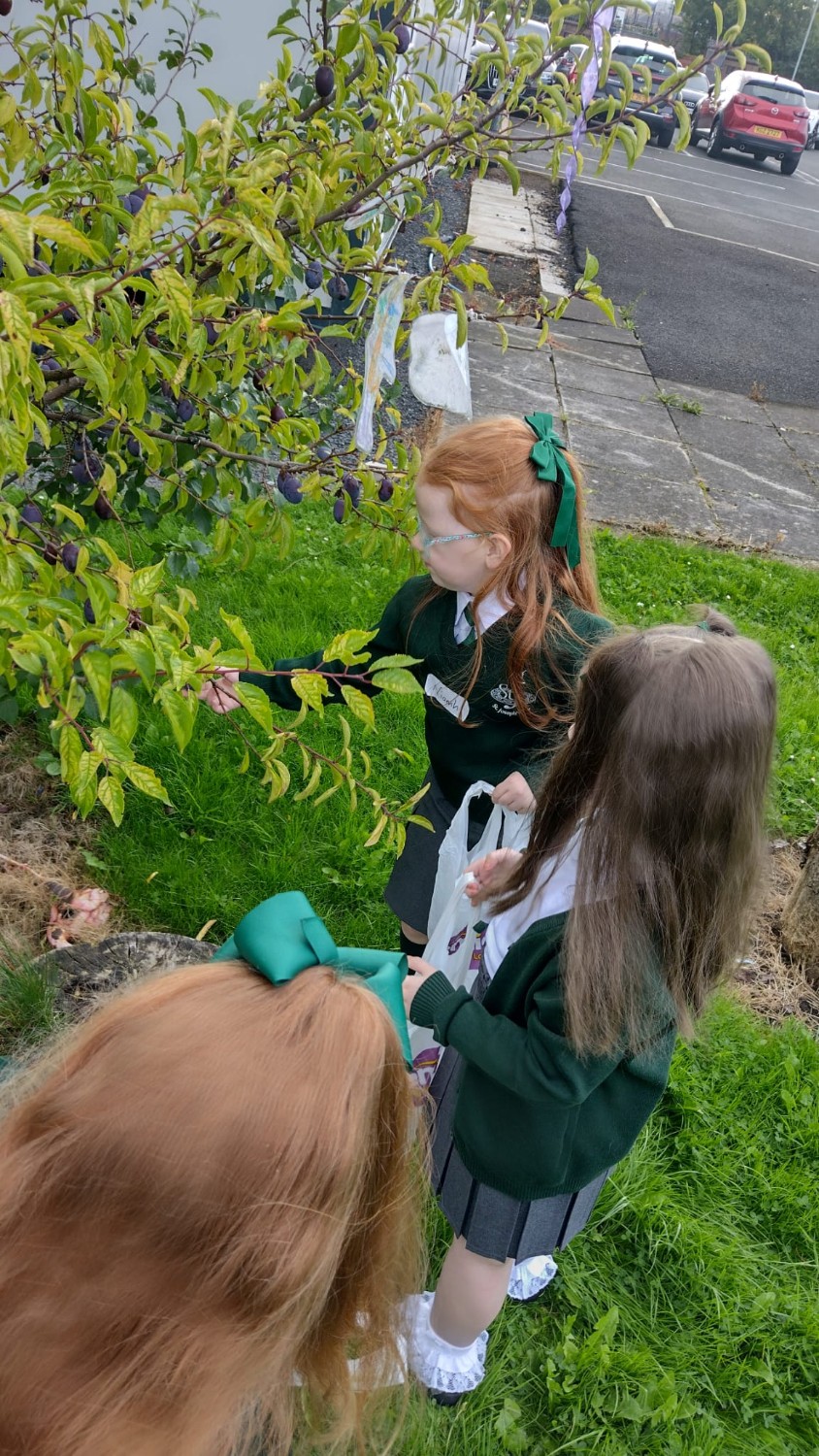
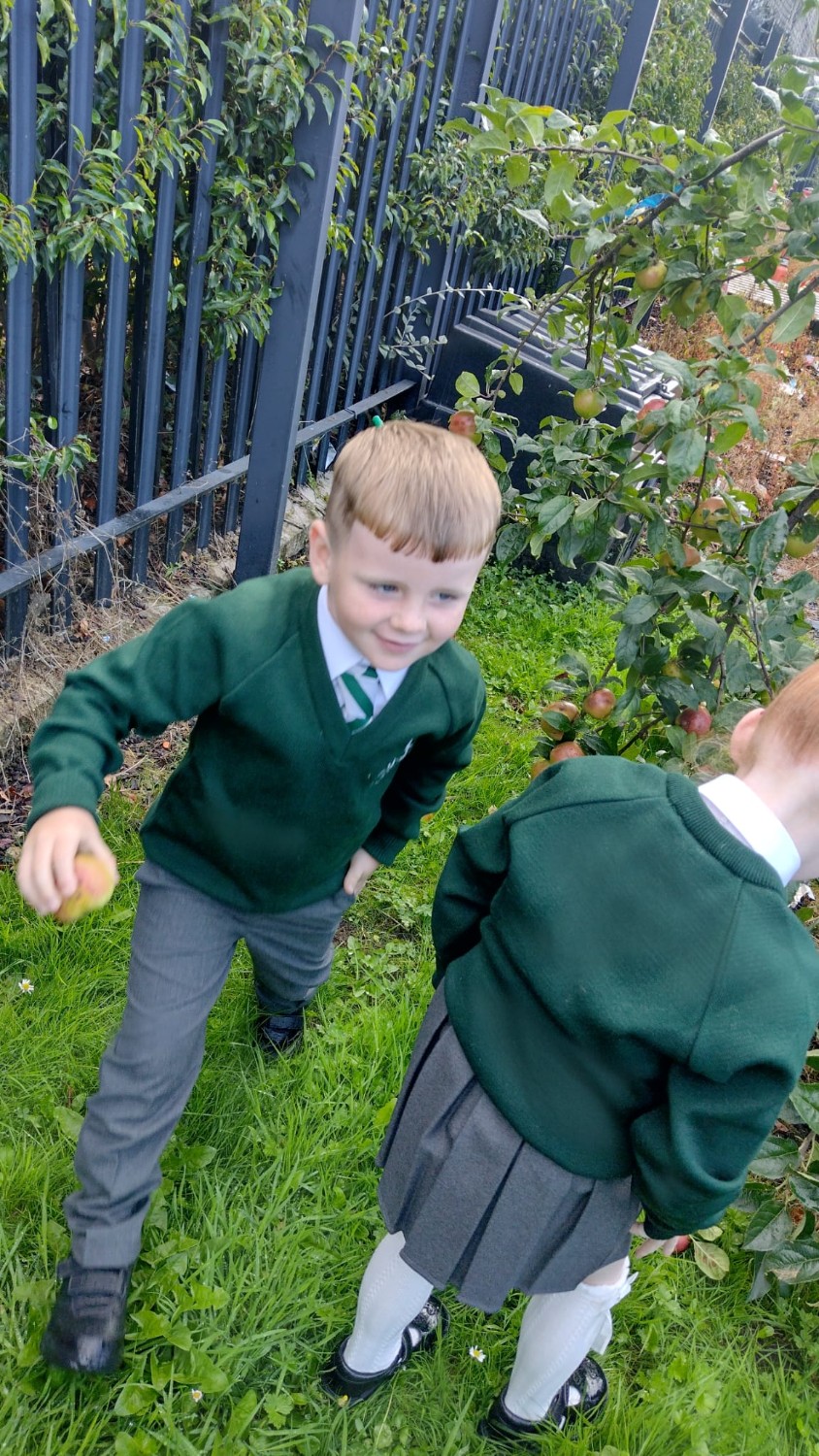
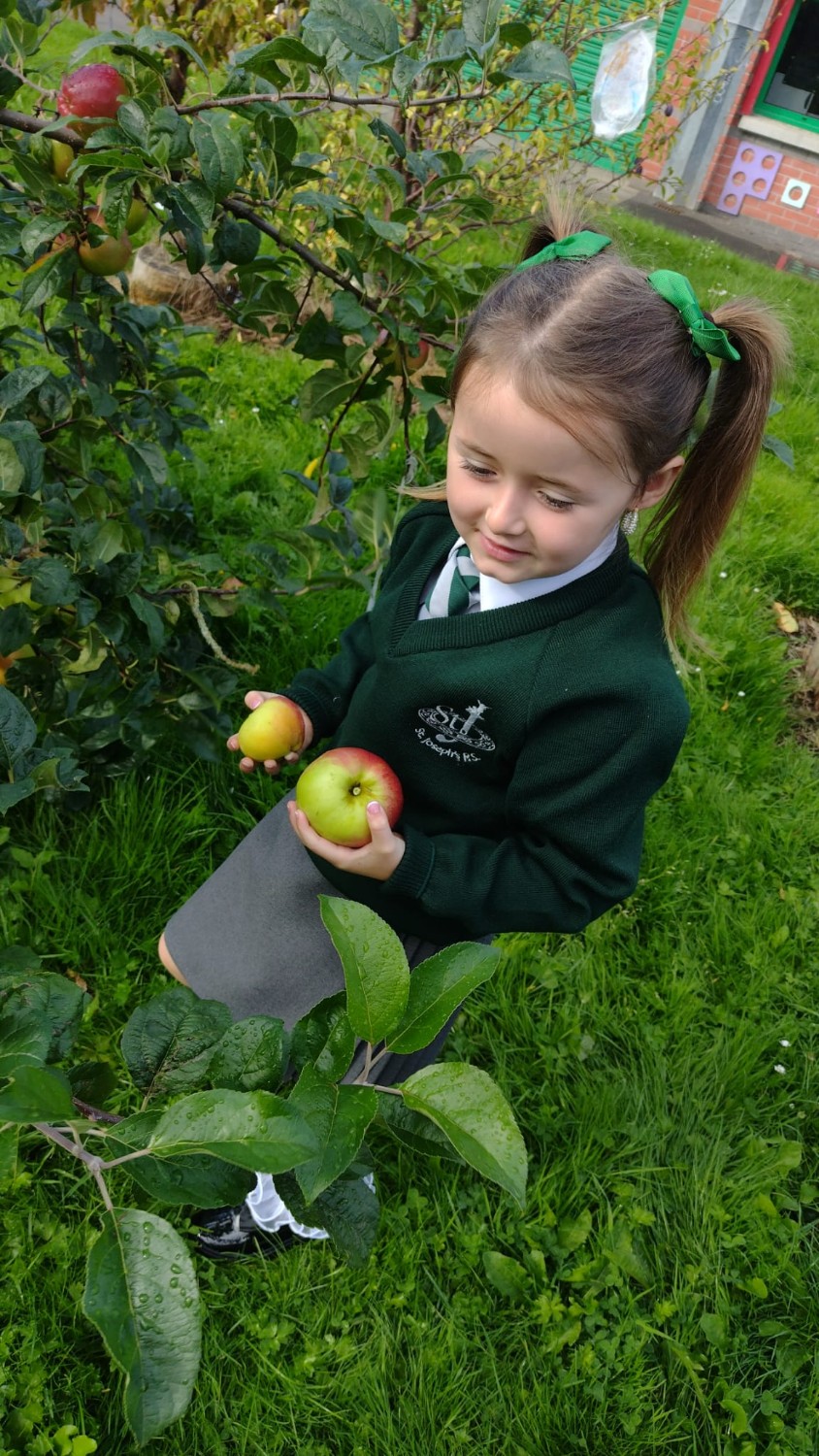
Mrs Glackin's Year 2 class harvested apples and plums from our Orchard this morning. We are going to make apple crumble with them. We are also going to try our delicious plums.
Why do we teach about food and harvesting?
1. **Understanding the Food Cycle**: Teaching young children about food harvesting helps them understand where food comes from. This basic knowledge fosters a connection between the food they eat and its natural origins, moving beyond the idea that food simply comes from a supermarket.
2. **Promoting Healthy Eating Habits**: When children learn how food is grown and harvested, they are more likely to develop an interest in healthy foods like fruits and vegetables. This knowledge can encourage them to make healthier food choices and develop lifelong healthy eating habits.
3. **Environmental Awareness**: Early lessons on food harvesting often include discussions about sustainability, seasonality, and environmental impact. This helps children develop a sense of responsibility towards the environment and understand the importance of sustainable practices in food production.
4. **Science and Nature Education**: Teaching about food harvesting introduces children to basic scientific concepts such as plant growth, life cycles, and ecosystems. It also provides practical, hands-on learning experiences, such as growing plants or visiting farms, which can enhance their understanding of biology and the natural world.
5. **Cultural Awareness and Appreciation**: Understanding how different foods are harvested and where they come from can also introduce children to different cultures and traditions, promoting inclusivity and appreciation for diversity.
6. **Life Skills**: Learning about food harvesting can be part of teaching important life skills, such as gardening, cooking, and understanding nutrition. These skills are not only practical but also empower children to make informed choices about their food and lifestyle.
By incorporating food harvesting into the curriculum, we aim to provide a well-rounded education that touches on science, health, environmental stewardship, and cultural understanding from an early age.




 Menu
Menu