 Menu
Menu
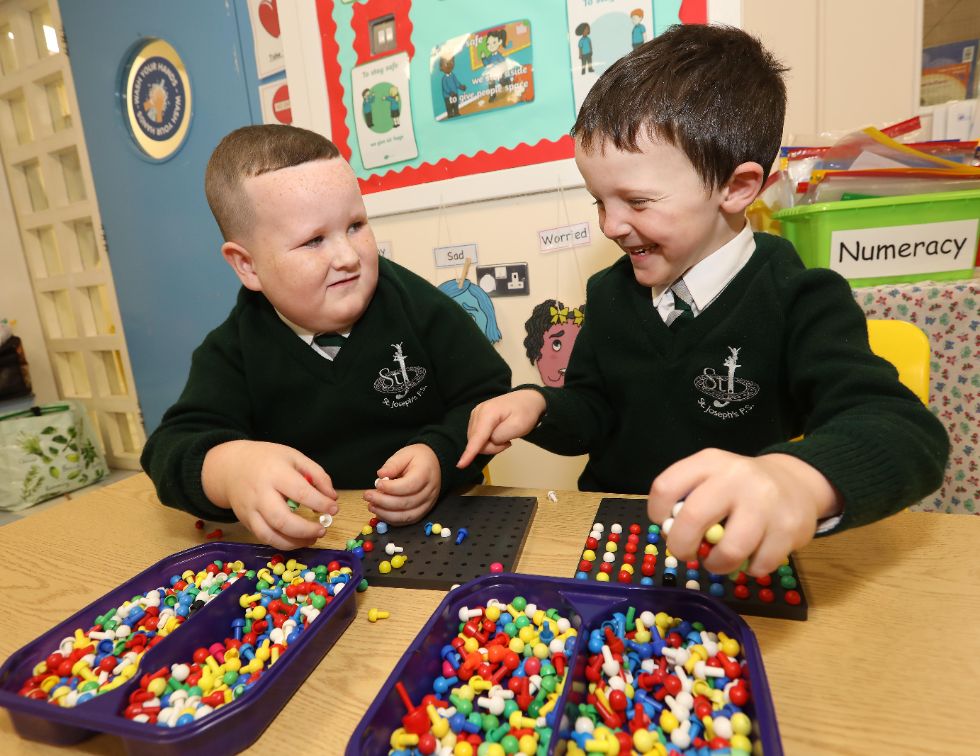









Numeracy
🔢 Supporting Numeracy at Home
TransformED encourages children to apply maths in real-life situations, helping them see numeracy as useful and relevant.
How parents can help:
Use maths in daily routines
Involve your child in cooking (measuring), shopping (totals and change), and telling the time to build practical skills.
Encourage problem-solving
Ask questions like “How could we figure that out?” and allow children to explore different methods.
Make maths fun and practical
Use board games, puzzles, and estimation activities to make learning engaging.
Build confidence
Keep maths positive—avoid saying “I’m not good at maths.” Praise effort and persistence.
👉 Key message: Numeracy is about thinking, exploring, and applying maths, not just getting the right answer.
🔢 Supporting Numeracy at Home
Understanding Learning Outcomes in the Primary Years (NI TransformED)
Numeracy within TransformED focuses on developing mathematical thinking and real-world application, rather than just completing sums. It supports children to become confident in using maths in everyday life.
Key Learning Outcomes in Numeracy:
1. Understanding Number
Children will:
-
Develop a strong sense of number (counting, place value, operations)
-
Understand how numbers work, not just memorise facts
-
Use mental maths strategies
👉 At home: Ask your child to explain how they got an answer, not just what it is.
2. Applying Maths in Real-Life Contexts
Children will:
-
Use maths in practical situations (money, time, measurement)
-
Solve problems linked to everyday experiences
-
Make connections between maths and the real world
👉 At home: Involve children in shopping, cooking, and planning activities.
3. Problem-Solving and Reasoning
Children will:
-
Choose strategies to solve problems
-
Explain their thinking and reasoning
-
Try different approaches and learn from mistakes
👉 At home: Let them struggle a little—it builds resilience and understanding.
4. Handling Data and Measures
Children will:
-
Collect, organise, and interpret information
-
Understand charts, graphs, and simple data
-
Use measurement (length, weight, capacity, time) accurately
👉 At home: Create simple charts (e.g., weather, favourite foods) or measure items together.
What this means for parents
The focus is shifting from “getting it right quickly” to:
-
Understanding concepts deeply
-
Using maths in meaningful ways
-
Building confidence and resilience
👉 Key message: Support your child by making maths practical, positive, and part of everyday life.
St Josephs Primary School, 1a Slate St, Cullingtree Road, Belfast BT12 4LD Phone: 028 9032 3683
